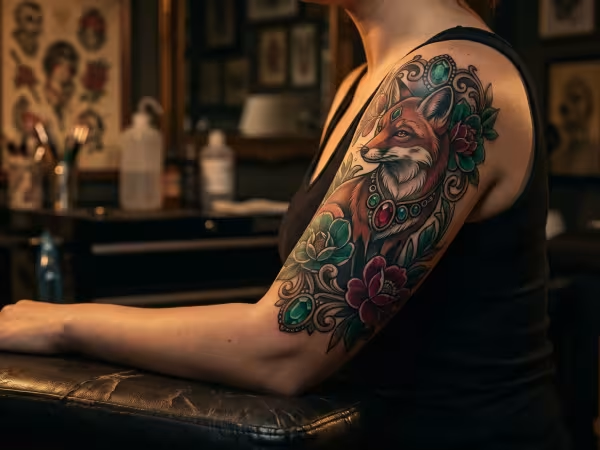

Realism tattoo guide
What is a realism tattoo?
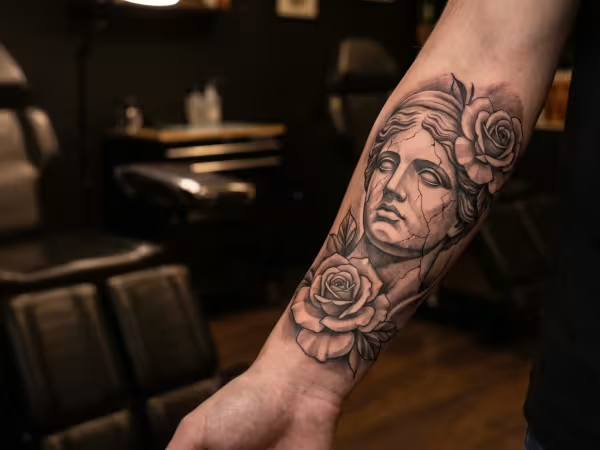
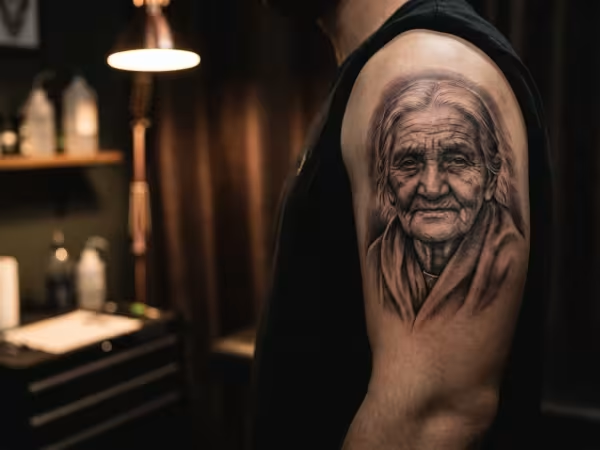
Realism (or photorealism) tattoos aim to reproduce a subject as it would look in a photograph. Instead of outlines, the image is built up from soft gradients, contrast and texture – the wet shine of an eye, the grain of fur, the way light falls across a face. It can be done in full color or in black and grey.
Popular subjects include animals (lions, tigers, wolves, eyes), portraits of loved ones or icons, flowers, clocks, statues and landscapes. Realism is often combined with other styles, such as geometric or trash polka elements.
| Lines | Few or none – shapes come from shading and contrast |
|---|---|
| Color | Full color or black and grey |
| Shading | Smooth, layered, photographic |
| Best for | Larger, flatter areas: thighs, upper arms, back, calves |
| Sessions | Usually several, especially for color |
| How it ages | Needs size and strong contrast to stay sharp |
Where it comes from
Photorealistic tattooing grew in the 1970s and 80s, alongside better machines, finer needles and wider ink palettes. Black and grey realism developed in Southern California's Chicano tattoo scene, and color realism took off in the 2000s as artists in the US and Europe pushed what single-needle and soft-shading techniques could do.
Choosing a realism artist
- Ask for healed photos. Fresh realism always looks great; healed work shows whether the artist builds enough contrast to last.
- Pick the right subject expert. Many realism artists specialise – portraits, animals or nature. Look for your subject in their portfolio.
- Bring a high-resolution reference. A sharp, well-lit photo makes a huge difference, especially for portraits.
- Trust their advice on size. Realism needs room for detail; shrinking it too far makes it blur over time.
Cost and sessions
Realism is slow, detailed work and is usually priced by the hour or by the day. Top realism artists often book months ahead and work in long day sessions. A forearm-sized color piece commonly takes two or more sessions, with a few weeks of healing between them.
Frequently asked questions
Do realism tattoos fade faster?
Fine, low-contrast detail softens over the years in any style. Realism done large, with strong darks and highlights, holds up well; tiny, highly detailed pieces are the ones that blur.
Color or black and grey realism?
Color brings subjects like animals and flowers to life; black and grey is often preferred for portraits and statues and tends to heal predictably. Many artists specialise in one – choose based on their strongest work.
How big should a realism tattoo be?
Bigger than you think. Most artists recommend at least palm size for a face or animal so the details have room to stay readable as the tattoo ages.
Top-rated Realism tattoo shops
Showing 49–72 of 2,145 shops, ranked by rating and reviews
-

Glorious Tattoo NYC
Also Fine Line Brooklyn, NY -
Family Business Tattoo San Diego
Also Neo-Traditional · Black and Grey · Fine Line San Diego, CA -
Electric Honor Tattoo Co.
Also Japanese · Traditional · Black and Grey Bensalem, PA -

Rockin Tattoos
Also Traditional · Fine Line · Black and Grey Faribault, MN -

Tattoo Ink Utah, LLC
Also Black and Grey · Fine Line · Blackwork West Jordan, UT -
IGLA Tattoo Boutique
Also Fine Line · Lettering · Ornamental New York, NY -
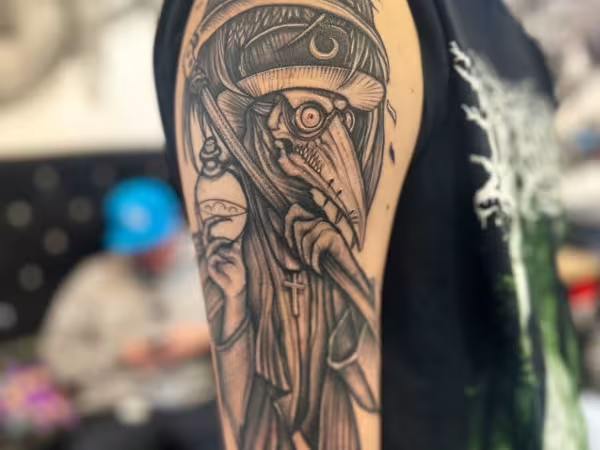
Superior Ink Tattoo and Piercings
Also Traditional · Cover-Ups Downey, CA -

Nickel & Brass Tattoo Collective
Also Black and Grey · Neo-Traditional · Fine Line La Crosse, WI -
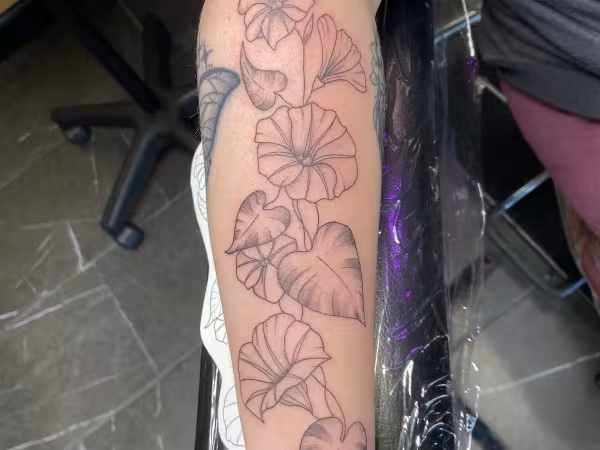
Exclusive Ink Studio
Also Anime · Neo-Traditional · Black and Grey Titusville, FL -
Kingdom Ink Tattoo
Also Black and Grey · Portrait · Japanese Pinellas Park, FL -

Steel City Tattoo Shop
Also Neo-Traditional · Blackwork · Lettering Monessen, PA -
Final Touch Tattoo and Piercing
Also Black and Grey · Cover-Ups · Fine Line San Antonio, TX -

Lucky Gal Tattoo and Piercing Waukee
Also Traditional · Neo-Traditional · Black and Grey Waukee, IA -
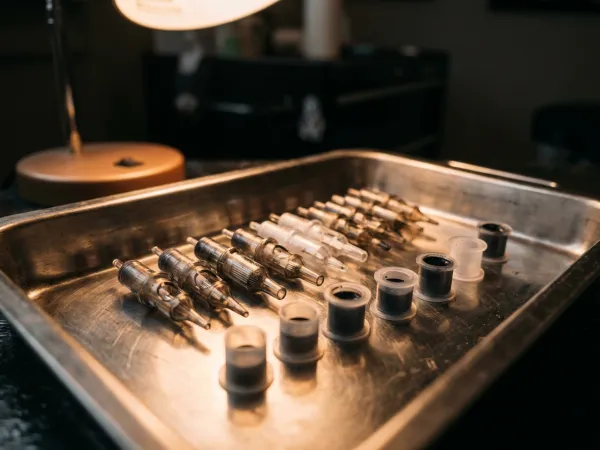
Tiger Tattoos W Vine St.
Also Cover-Ups · Fine Line · Anime Kissimmee, FL -
Honor and Grace
Also Traditional · Japanese · Cover-Ups Savannah, GA -
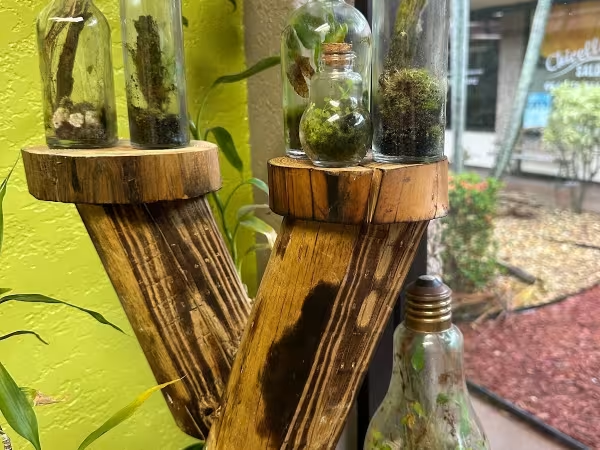
Michael’s Body Art
Also Illustrative · Black and Grey · Neo-Traditional Coral Springs, FL -
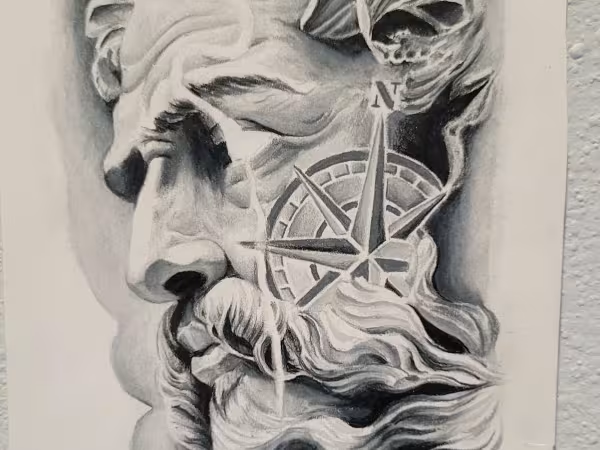
Work of Art Tattoo and Piercing
Also Portrait · Fine Line · Floral Las Vegas, NV -
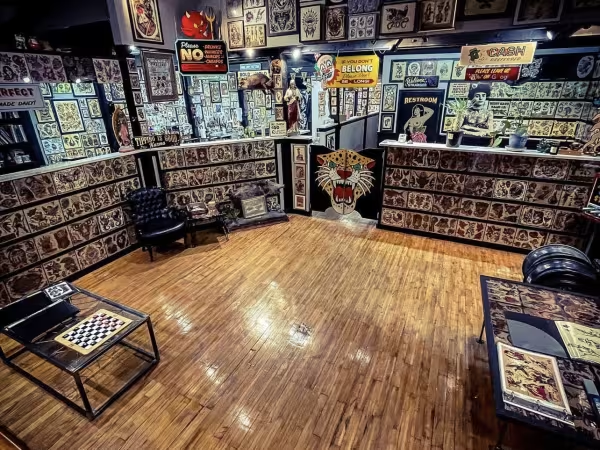
Big Cat Tattoo
Also Traditional · Fine Line · Japanese Atlanta, GA -
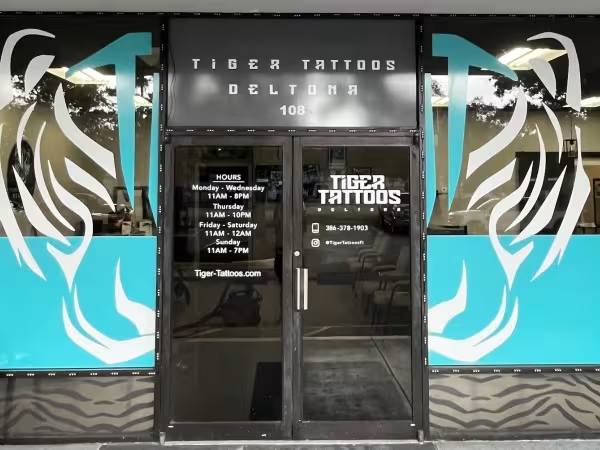
Tiger Tattoos Deltona
Also Cover-Ups · Fine Line · Anime Deltona, FL -

The Cube Tattoos
Also Fine Line Hialeah, FL -

Art and Sol Tattoo Gallery
Also Black and Grey · Fine Line · Traditional Tucson, AZ -
The Gallery Tattoo Greenville
Also Black and Grey · Lettering · Portrait Greenville, SC -

Permanent Paint Tattoo and Fine Art Studios
Also Fine Line · Traditional · Neo-Traditional Bowling Green, KY -

Aura Tattoo Studios
Also Fine Line · Floral · Traditional Lewisville, TX
Realism tattoo shops by state
- California 241
- Florida 229
- Texas 168
- New York 152
- Pennsylvania 84
- North Carolina 76
- Colorado 73
- Washington 64
- Illinois 63
- Ohio 60
- Arizona 58
- Georgia 58
- Nevada 58
- Michigan 54
- Wisconsin 45
- Tennessee 43
- Minnesota 41
- Virginia 40
- New Jersey 37
- Oregon 36
- Utah 36
- Massachusetts 35
- Missouri 35
- Connecticut 31
- Hawaii 29
- Indiana 27
- Maryland 25
- Kentucky 22
- South Carolina 21
- Iowa 20
- New Hampshire 20
- Oklahoma 17
- Idaho 16
- Louisiana 12
- Alabama 11
- Maine 11
- New Mexico 11
- Kansas 10
- Montana 9
- Delaware 8
- Nebraska 8
- North Dakota 8
- Rhode Island 8
- Alaska 6
- Arkansas 6
- South Dakota 6
- Vermont 4
- Washington, DC 4
- Mississippi 3
- West Virginia 3
- Wyoming 3