
Japanese tattoo guide
What is a Japanese tattoo?
Japanese tattooing, or irezumi, is built around large pieces designed to flow with the body: sleeves, back pieces and bodysuits. A main subject – koi, dragon, tiger, phoenix, snake, foo dog, hannya mask or folklore hero – sits in a background of waves, clouds, wind bars and seasonal flowers that ties the whole piece together.
The imagery carries meaning. A koi swimming upstream stands for perseverance, peonies for wealth and courage, cherry blossoms for the beauty of a short life. Flowers and backgrounds are often chosen to match a season so that the whole design is consistent.
| Lines | Bold outlines with flowing, body-shaped compositions |
|---|---|
| Color | Rich color or black and grey; dark backgrounds |
| Background | Waves, clouds, wind bars, flowers |
| Best for | Sleeves, back pieces, chest panels, legs |
| Sessions | Many – a full back piece can take a year or more |
| How it ages | Very well; designed for a lifetime |
Where it comes from
Irezumi flourished in Edo-period Japan (1603–1868), inspired by woodblock prints of the novel Suikoden by artists such as Utagawa Kuniyoshi. Masters known as horishi worked by hand with bundles of needles (tebori), a method some still use today. Western artists like Sailor Jerry and Ed Hardy studied with Japanese masters, and Japanese-style tattooing is now practised worldwide.
Choosing a Japanese-style artist
- Look for large, flowing work. Strong Japanese artists design for the body, not just a flat image placed on it.
- Check the backgrounds. Wind bars, waves and clouds should be confident and consistent – they're the hardest part to get right.
- Plan the whole area. Discuss your full sleeve or back piece up front, even if you do it in stages.
- Ask about the imagery. A knowledgeable artist will explain which subjects, flowers and seasons go together.
Cost and sessions
Japanese work is big and usually priced by the hour or by the session. A full sleeve commonly takes 20–40 hours across many sessions; a full back piece more. Many collectors book a regular session every few weeks.
Frequently asked questions
Is it disrespectful to get a Japanese tattoo if I'm not Japanese?
Japanese-style tattooing is practised and collected worldwide, and most artists welcome clients of any background. Respect comes from choosing an artist who knows the tradition and using imagery with its meaning in mind.
Can I get a small Japanese tattoo?
Yes – a koi, peony or hannya mask works well on a forearm or calf. Just know that the style is at its best in larger pieces, so consider how it could grow later.
What is tebori?
Tebori is hand tattooing with needles fixed to a wooden or metal rod. It's slower than a machine and is offered by a small number of specialist artists.
Top-rated Japanese tattoo shops
Showing 937–960 of 1,031 shops, ranked by rating and reviews
-
Pistol Pete's Tattoo/Piercing Saloon - Arlington
Also Cover-Ups · Realism · Portrait Arlington, TX -

Forever Ink
Also Cover-Ups · Black and Grey · Fine Line South Plainfield, NJ -

Cedar Springs Tattoo & Piercing
Also Realism · Blackwork Dallas, TX -
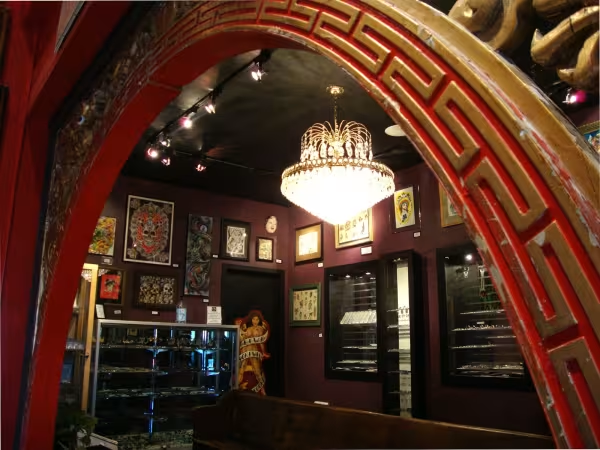
Slave to the Needle Tattoo & Body Piercing
Also Traditional · Neo-Traditional · Realism Seattle, WA -

Adorn West
Also Traditional · Neo-Traditional · New School Portland, OR -

Revelation Tattoo
Also Traditional Gladstone, MO -
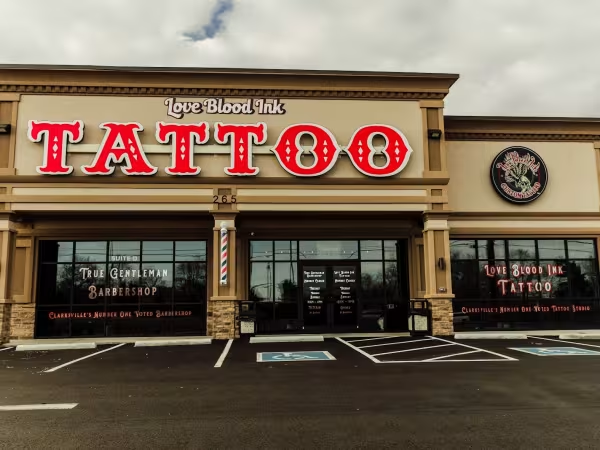
Love Blood Ink Tattoo
Also Traditional · Black and Grey · Realism Clarksville, TN -
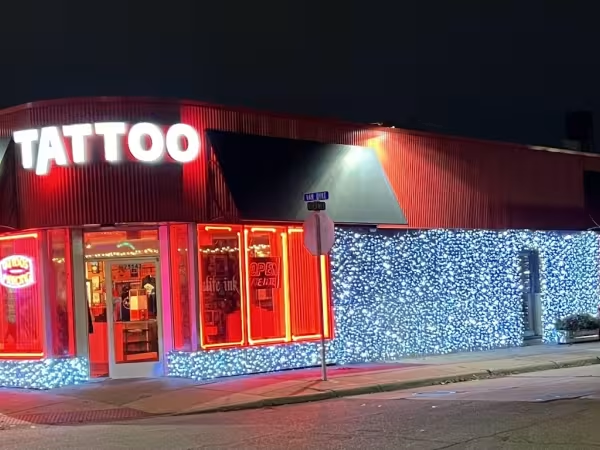
Elite Ink Tattoo Studios
Also Traditional · Tribal · Portrait Center Line, MI -
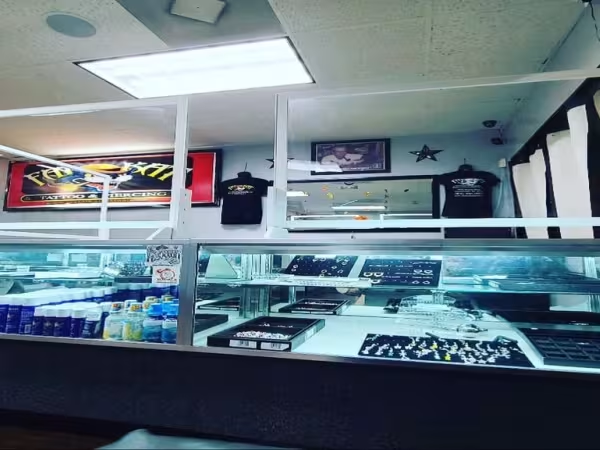
Fat Kat Tattoo & Body Piercing
Also Black and Grey · Realism · Fine Line Jacksonville, FL -

Studio Kazoku
Also Traditional San Francisco, CA -

Talon Tattoo
Also Geometric · Dotwork · Fine Line Winston-Salem, NC -

West River Tattoos
Also Traditional · Neo-Traditional Comstock Park, MI -

Acala Tattoo & Design
Also Realism · Cover-Ups · Black and Grey Liverpool, NY -

Blood Moon Tattoo
Also Realism · Portrait · Cover-Ups Kenvil, NJ -

The Pittsburgh Tattoo Studio
Also Black and Grey · Realism · Fine Line Washington, PA -
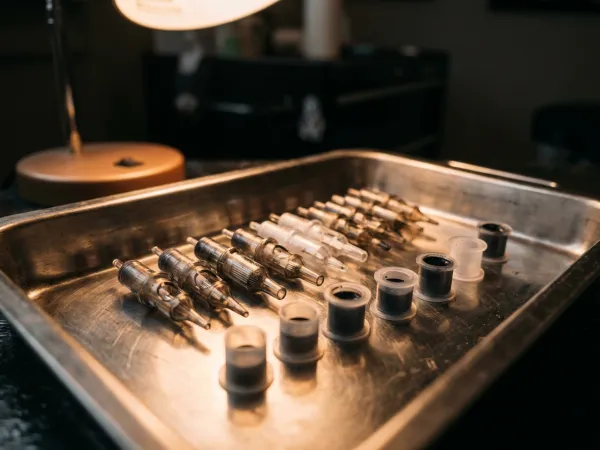
PERFECTION TATTOO
Austin, TX -
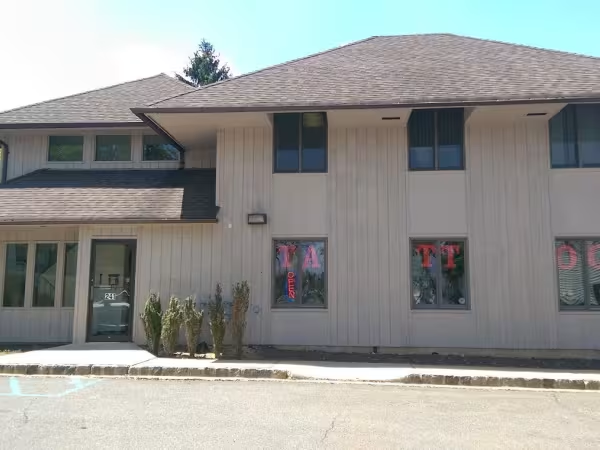
45 Monks Tattoo
Also Tribal · Black and Grey · Traditional East Brunswick, NJ -
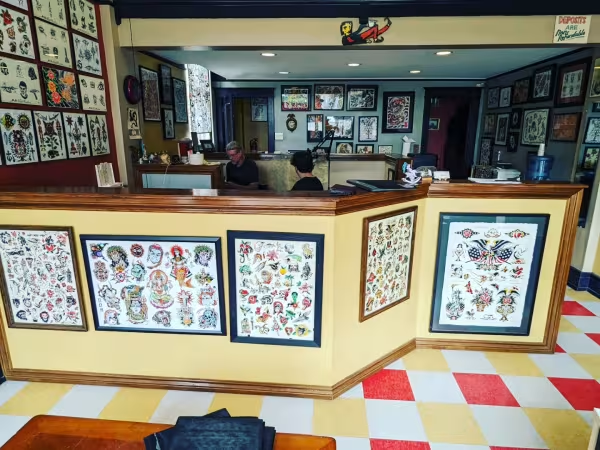
Village Tattoo
Also Cover-Ups · Tribal · Portrait Romeo, MI -

Valei Arts Tattoo Studio 2
Also Traditional · Blackwork · Black and Grey Jacksonville, FL -
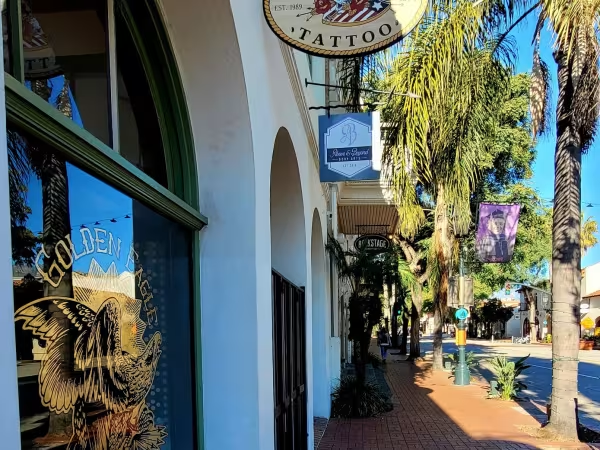
Golden Eagle
Also Traditional · Fine Line · Black and Grey Santa Barbara, CA -
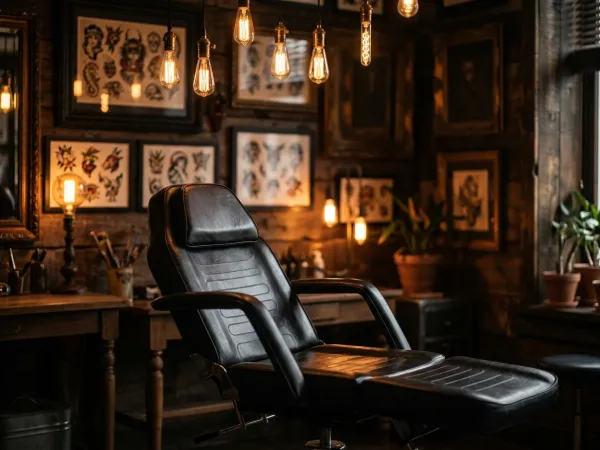
Eye of the Tiger Tattoo
Also Fine Line · Illustrative · Anime San Francisco, CA -
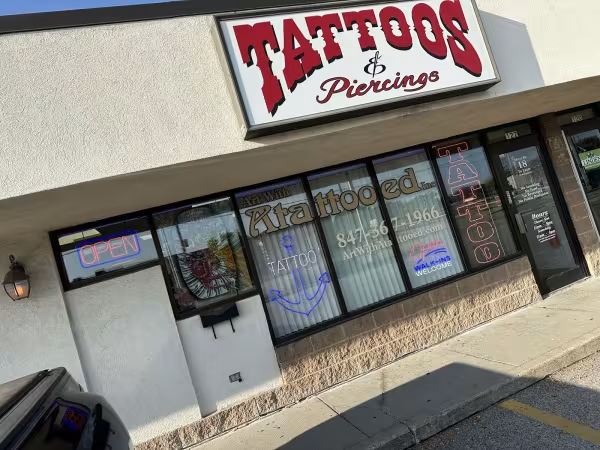
Art With Atattooed
Also Fine Line · Traditional · Neo-Traditional Libertyville, IL -

Art Work Rebels
Portland, OR -

Bare Knuckles Tattoos
Also Neo-Traditional · Traditional Charleston, WV
Japanese tattoo shops by state
- California 138
- Florida 113
- Texas 93
- New York 71
- Colorado 44
- Washington 42
- North Carolina 38
- Pennsylvania 37
- Georgia 32
- Arizona 28
- Hawaii 27
- Illinois 25
- New Jersey 25
- Virginia 22
- Massachusetts 21
- Nevada 21
- Ohio 21
- Minnesota 20
- Tennessee 20
- Michigan 19
- Missouri 18
- Oregon 18
- Maryland 12
- Utah 12
- Wisconsin 12
- New Hampshire 10
- Idaho 9
- South Carolina 8
- Alabama 7
- Connecticut 7
- Delaware 7
- Louisiana 7
- New Mexico 6
- North Dakota 5
- Indiana 4
- Nebraska 4
- Oklahoma 4
- South Dakota 4
- Arkansas 3
- Kentucky 3
- West Virginia 3
- Iowa 2
- Maine 2
- Montana 2
- Vermont 2
- Washington, DC 2
- Rhode Island 1